-
UPDATES UPDATES UPDATES !! This is your major problem ! There is nowhere near enough information on your blogs. Your blogs are the most improtant thing in your lives right now !!!
I am sending them off to the examiner so please update them !!
You must finish the FRONT COVER + CONTENTS PAGE and do three updates !
If not there will be serious consequences ! Err..... Seriously !
 This is a picture of Hard work !
 -
Some theory for you :
https://www.dropbox.com/s/tof07qn1h3hp5yl/Representation%20some%20theory.doc?m=
Read it, that's all !

-
Here is a great competition for you to enter:
The theme is : superheroes !
Surely you can make and amazing 1 minute film and win this therefore catapulting yourself into international stardom ??
http://www.theguardian.com/film/2013/nov/13/make-a-one-minute-short-film-guardianwitness

-
After our amazing trip to the BFI i know you all raring to go and jump into a pil;e of books and articles about the british film industry so i thought i would give you a few helpful links here.
Remember this is a research and presentation of knowledge based task so teh person who knows the most and has the most interesting facts and case study examples will get the best grade. You get few marks for style and grammar etc so dont think you can rock up on the day and ace this. You actually need to know stuff.. this isnt Maths !
(sorry maths department)
Anyway here are some brilliant links to help you:
http://www.the-numbers.com/
http://www.bfi.org.uk/sites/bfi.org.uk/files/downloads/bfi-statistical-yearbook-2013.pdf
http://industry.bfi.org.uk/
-
 Ok here it is the amazing, brilliant, badly spelt collection of editing clips.
Well done though , this is decent work for one lesson!
Year 12 students try and exemplify all known editing techniques ... ex from Mr Sloan on Vimeo. -

Thanks to all the class (minus 3 who missed out) who came to the year 12 study day at the British Film Institute last Friday for a study and preperation day for your upcoming exam on the British Film Industry. It was great to see you all asking questions infront of you peers and enjoying talking about the film industry and listening so well to actual real people who work in the industry rather than just your teacher telling you about it.
Im sure you had a great day. Hopefully you learnt a lot to get you thinking about your research projects on British vs Hollywood film.
Here is a trailer for a film we will probably watch soon, its this year's 'fish tank' apparently:
-
So at the end of last term you guys completed a short mock exam style analysis, and generally it was very pleasing to see you all attempt it so well. For your first effort at this kind of exam you all did well. In today's lesson we will be analysing the clip in a bit more detail in order to get you thinking about the techniques involved and also going over exam technique.
I had a go at screen capturing some analysis of the clip , but its a bit embarrassing so i will leave it for you guys to do this afternoon !
Mise en scene primeval analysis 1 from Mr Sloan on Vimeo. -
I knew it someone else cares about Media Education other than me !!
http://schoolsimprovement.net/media-education-now-a-must-in-schools/
…It is not sufficient to leave media education to the individual enthusiastic teacher. As leading UK media educationist Cary Bazalgette says: “If media education is worth having, then everyone should have it.”
Yeaaaaaaahhhhhhh wot she said etc etc !
-
Year 10s you need to finish your coursework analysis of two magazines over half term. You could use the two below or get your own ones.


-

So i know your al filming your projects but its important to keep aware of ideas and techniques used in professional products. Here is a nice article highlighting some of the year's best videos:
http://www.stereogum.com/1357681/stereogums-top-25-music-videos-of-2013-so-far/video/
Enjoy -
I still haven't received all of your url addresses for your blogs yet so make sure you let me know what they are please.

When you have done that you can have a go at this:
Creating random CD covers:
To get the name of your band you need to use this link:
Whatever comes up that is the name of your group / artist
Then do it again , this will give you the name of your Album
Then find a random picture from this site:
When you have them try and combine them in photoshop or even in word
Then post the best ones at your blog
My best effort is above. Hopefully yours will be better. -
Homework:
After today's lesson on camera shots you need to analyse a scene from a movie or tv drama and comment on how the director has used camera shots.
Here is an example:
Yours sshuld be at least 4 or 5 slides in power point . Post them on your blog before thursday:
-
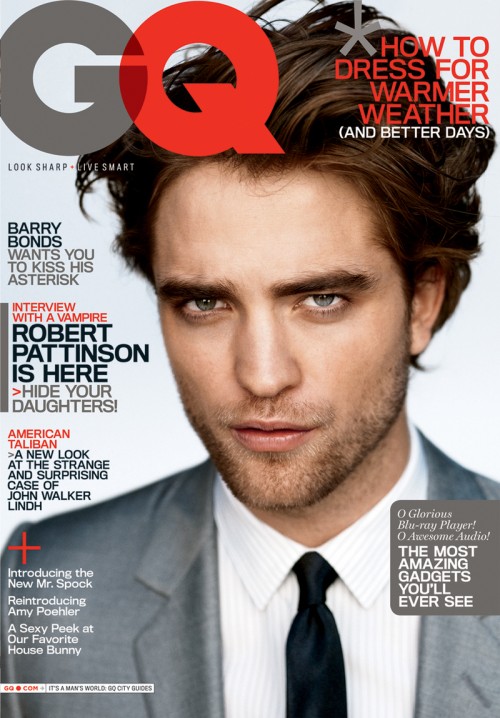
Magazine Analysis. Using the new terminology you have learnt today and the old skills you have practiced concerning Connotations. You need to analyse 2 magazine covers (that have different target audiences). Answering this question.
'How have these magazine covers been designed to target their audiences?'
This needs to be done for next Thursday.
You could choose the two below or two of your choice

-
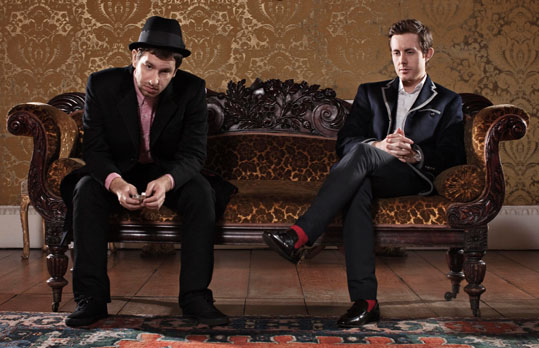
So an amazing montage style video from Chase & Status that is a homage to 90s rave culture :
It fulfils some of the key criteria of the videos you are trying to make:
- It doesn't actually have anyone miming the words directly addressing the camera (youdont have to do this)
- Its a great example of how to take a potentially reptitive and boring technique like montage and make it lively and exciting
- The vibe of the visuals matches that of the song
- It has lots of really interesting / fun exciting people and places / things to look at
- Its all set in places you could go to with normal everyday people mostly
- The storyline is extremely simple. Almost invisible !
- Its made on the cheap (although that adds to the quality of it)
- It almost looks amateurish but still feels professional
- Its fast paced and shows how you need loads of footage in order to keep your audience's attention
Keep up the good work so far guys.. your videos are looking great !
-
So today's lesson will be looking at Mise en Scene in more detail:
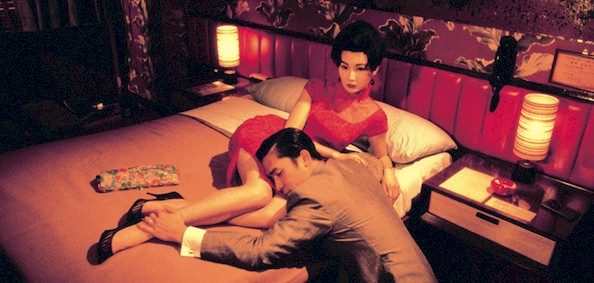
Here is a clip i want you to write a short response:
'How did the director (Ridley Scott) manipulate mise en scene in this scene to create an impact on the audience?'
-
So we have officially started our production. You are going to make a school magazine and then a music magazine. One day, if you do well in AS media you could be working for an actual magazine company like this one below. -
The illusion of choice. Pseudo-Individualisation. Democratisation. All of these things we will cover in today's lesson. Hopefully this will be something you keep in mind when studying the film industry this year. An example of how repetitive and formulaic Hollywood can be is below. After watching it errr ..get out of here !
-
So yesterday the year 11 media studies group went to Earls Court for a look at the years upcoming new games and consoles. The eurgamer conference was packed with people and games but the students really enjoyed themselves and found loads of really useful things for their exam research. Some got up on stage and battled it out street fighter II style and we got loads of free stuff! A really great day out and here are some photos:


-
Narrative. Everything has one, even photos, but we are going to look at teh theory of Vladimir Propp who analysed fairy tales. Whichi is why there is a picture of Aladdin here! Do all stories share the same basic structure Now your go.. can you apply his theory of Narrative to any Film or TV drama of your choice. Post it onto your blogs Thanks

-

bfi film academy
developing the next generation of film industry talent
An exciting learning opportunity for talented, creative and dedicated students with an interest in film and media; the BFI Film Academy, delivered by Eastside, is an intensive, wide-ranging and adventurous eight-week film training course for 16-19 year olds.
We are asking teachers and school staff to spread the word and encourage pupils with an interest in filmmaking, and the motivation to take on a new challenge, to apply for the BFI Film Academy.
· Students will work with an award-winning filmmaker to produce their own short films and documentaries
· Industry professionals will run a series of master-classes and workshops, including editing, sound production and lighting design
· Students will find out more about career pathways in the film and media industry
· Participants will work towards the nationally recognised Silver Arts Award qualification
This is your chance to nominate your most talented, motivated pupils with a passion for film to take part in the BFI Film Academy 2013-14.
Nominate students from your school by sending an email to joanna@eastside.org.uk
The deadline for student applications is 12 October 2013. Details of how they can apply can be found on our website:
http://www.eastside.org.uk/programme_categories/bfi_film_academy
Any Questions? Call us at Eastside Educational Trust on 020 7033 2380
Joanna Cord
Administrator
Eastside Educational Trust
Direct: 020 7033 2384
Switchboard: 020 7033 2380
-
So it was great to see you all hard at work today even though no one guessed the faction was from psycho . It was interesting to see how difficult it was to work out the genre of the film when you had no visual clues to guide you. Can you try and think of some generic based psycho puns for your titles for your drama / rom com titles?!Great workThe picture below is of dan / christiana/ zainab !!!

-
Well maybe the first step towards fame and fortune....

I have just been emailed this huge oppurtunity to get involved in the BFI film workshop . Its tomorrow night at teh BFI southbank. You should all jump at the chance to be onvolved in this !
BFI Future Film AcademyOpportunities for 18 aspiring young filmmakers to join a fun and practical talent development programme as part of the national BFI Film Academy schemeFree Information Evening: Wed 18 Sept 18:00 The Blue Room, BFI SouthbankApply to the BFI Future Film Academy and from October 2013 - February 2014 you’ll work with film industry and education professionals to develop your creative talents, learn about different careers in the film industry, and produce your own short films.As well as hands-on filmmaking workshops, you’ll have free access to screenings and events at the 57th BFI London Film Festival, the BFI Gothic Season, monthly BFI Future Film events and the 7th BFI Future Film Festival. Participants will also be actively involved in the exhibition and distribution of their work and gain a Silver Arts Award.Most sessions will run on Wednesday evenings between 6-9pm and on the weekends (during the day), as well as through half terms in October 2013 and February 2014 at BFI Southbank.To find out more come along to our Open Evening in The Blue Room at BFI Southbank on Wednesday 18 September. For more information email bfifuturefilmacademy@bfi.org.uk or visit bfi.org.uk to download the application form.The deadline for applications is Monday 23 September, 17:00. -
Alright people this is your first mission (homework) !
As part of your coursework requirements this year you have to create a blog and show your production progress over the course of the year. For most of you that will be no problem so ets get started.
1: You need to go to http://www.blogger.com and sign up (its free, don't worry!).
2: You need to choose an email address to use. You will need to sign up to other things (like dropbox) during the course so make sure its an email address you use often and don't mind having school stuff associated with.
3.:Choose a display name and blog address:Tip don't do anything too complicated that you wont remember. Use a password you know well.Also dont use you full real name.Something with one part of your name or a nickname is fine like Sloanmedia.blogspot.com for example.
So once you have your username/display name and your blog address and title you are set.
3: It will ask you to choose a design and then you can customise it however you like. But remember this is your coursework so don't put anything inappropriate on it !!
Try and write something on the blog by 'posting a small message about your first impressions of Media Studies and what you hope to achieve on the course.
If you can do this without bothering me than well done. If you cant do this then you need to comment here (at the end of this post) and i will help you.
This might help:
http://www.youtube.com/user/BloggerHelp
This homework is due for Thursday 5th September.
Safe !!
-

For representations of gender... Its your homework yr12 so get it to me by tuesday please ! -
Homework : 8 statements about this clip please !! -
so do some work........and here are lots of clips for you to analyse ! No Excuses !!!! -
All of you need to start revising. You should have already made cards with key terms on to help you remember the words you need to know. You also must get up to date film industry knowledge. Start with making 2 case studies of films you know really well. Make sure you practice writing exam style answers over easter and post them up here on the blog as comments and i will mark them. Good luck
-
Your case studies shoudl be ready by now: I will post some more links here soon (after wednesday)
But here is a list that a film studies student made of all teh films he has had to watch at uni:
BIG LIST OF GREAT FILMS:
Stop complaining and make two great case studies for your exam please ! -
 COVER WORK FOR THURSDAY PERIOD 4: - 28th FEB :
1.All of you need to add at least 2 or 3 blog posts to your blog explaining your progrss in different areas of your practical work.
2.You could also if you want try and find 5 or 6 double page spreads you like and put them on your blog.
3.Then continue to work on your magazine pages. You should all have finished your contents pages now and should be on to your double page spread.
Also i found this video with 5 million hits on deadtube.....Im not sure who these talented individuals are that have been wasting their time but i reckon they should probably concentrate on their day job (studies)!!!
If you complete your work for this lesson i will take this down or at least not put it on youtube ! -
Right here is you homework for this week (Due next tuesday)
Anlyse the first 2 minutes 20 seconds of this clip for its use of editing techniques and representations of class:
Here is the worksheet for those of you who werent in
Glossary of EDITING terms
Cutting: the point at which one camera shot moves instantly to another
· Shot/reverse shot – this is an editing pattern that cuts to the view in the opposite direction. It is most commonly used in dialogue, cutting from one speaker to the other, following a master shot that has shown us where the speakers are standing.
· Eyeline match – part of continuity editing, where we see a character look in a particular direction then the next cut gives a shot of what they see
· Graphic match – is when we cut (or more often transition, such as a cross fade) to a shot showing an object of a very similar shape in the same place on the screen. For example, a shot of a round traffic light crossfades into a shot of the rising sun where the round sun emerges through the circle formed by the traffic light.
· Action match – this is part of continuity editing where a shot of a character making an action is followed by a cut to a shot of the next (or a subsequent) logical action. For example, we see a character reach for a door handle and open the door by 30 cm. We then cut to the other side to see the door swing open and the same character walk through. Here, after the cut, the door must be open by at least 30 cm for the continuity to look right.
· Jump cut – unusual edit pattern and not to be used when we actually mean ‘cut’. A jump cut is where a few frames have been removed from a continuous action, giving a jerky, unnaturalistic feel to the presentation of the action. It is an arty device to make the drama look more edgy and is unusual in verisimilitude TV drama styles although drama aimed at a teen or 20 something target audience eg BBC Three might use it – Being Human, for example and the work of film director Jean-Luc Godard in the film Breathless.
· Crosscutting – a cut to a piece of action that is happening at the same time (concurrently), or, perhaps, in and out of a series of flashbacks (which show the past but are memories happening concurrently inside a character’s head).
· Parallel editing – running two or more sequences of action that are happening at the same time and we cross cut between them – see episode 1 of Criminal Justice (2009) where Joe Miller is trying to phone his wife and we see what he is doing and what is wife is doing at the same time but in different places.
· Insert – a cut from a wide shot or a master shot to a closer shot of detail that is already within the first shot. A good example of this is football coverage where we can see much of the pitch but when something interesting happens we cut down to the 2 or 3 players involved seen from a similar angle. An insert must not be confused with a zoom because we go from the master shot to the insert in one cut: an insert is an edit whereas a zoom is a form of camera movement (even though it is technically possible in post production using digital editing software!).
· Cutaway – a cut from the main action to a piece of related action somewhere elsewhere or just outside the frame. Eg a group of people talking inside a house cut to someone coming up the drive (to join or challenge the group).
· Long take – ‘take’ refers to the length of time the camera is running between edits (cuts or transitions). A long take means that we do not see an edit fro a long period of time. They can be used effectively to slow time or to create the impression of a busy place. A great example of the long take slowing everything down is at the end of the 1967 film The Graduate where Dustin Hoffman's character, Ben, has driven across California to stop his sweetheart's wedding: his car runs out of petrol half a mile from the church and he finishes the journey on foot. A busy place might be a pub in a soap opera where a character enters, the camera zooms out and pans to follow them to the bar, they buy a drink and the camera follows them to their seat, creating a master shot of the group they are with before we cut to close ups and shot reverse shot of the conversation.
· Short take – the opposite of a long take. This is used in montage and means we have rapid edits from shot to shot.
Visible/Invisible editing – constructing the narrative style
· Invisible editing – is a style of editing where the joining of shots is discreet and does not draw attention to itself. It is visible to a media student but unlikely to be noticed by the average member of the audience. This is also known as Classical editing and has grown out of the
· Visible editing – is a more arty style, used increasingly often to mark out a new or different style to the programme. Its origins are in early Russian cinema, as opposed to
Editing the passage of time – controlling the pace and revealing the narrative
· Slow motion – slows the action down from real time speed. This is editing because it is achieved digitally in post-production and cannot be created while the camera is rolling.
· Ellipsis – is where a cut does not go to the next instant of drama but leaves a gap, which could be seconds, minutes, hours, months or even years. Sometimes an ellipsis is denoted by a caption “Six months later…” or a reference within the shot – eg Paradox extract, DI Flint leaves her car in the car park, cut to OS shot in the lift where we can see from the display that she has already reached floor 2. Ellipsis can be indicated by changes in the ambient sound – eg The Street where cuts take us to the middle of the night (no juke box music just a car passing in the distance) then to the morning (no single cars but traffic and the sound of buses).
· Montage – compresses time and gives a series of short takes (see above) indicating the events in between one narrative point and another, often accompanied by non-diegetic music to heighten the dramatic quality of the events. They often fade out at the end. Examples include The Street where the working day and getting ready for a beer is compressed into a series of shots underscored by a soundbridge of bluesy dramatic music and, of course, ‘I need a montage’ in Team America.
· Expansion of time – is the opposite of ellipsis and montage. It is usually achieved by slow motion or using long takes. We are so used to reading editing and short takes that editing choices to include long takes slow time down. In ‘Paradox,’ after the ellipsis to get DI Flint into the lift, we see the display click each floor up to number 7; although this does not take long, the fact that we are now in real time appears to slow the action and heighten the tension we feel about what she will meet when the lift doors open. See also example from The Graduate above. Another example using a ticking clock would be where we see the clock at, say, 010 but cut to a montage giving extra information that takes 10 seconds in real time; when we cut back to the clock it reads 005 – time has been expanded by the editing (thanks to Mas del Vecchio for this example).
Transitions other than cuts – determining pace and editing style
· Dissolve – where the image appears gradually to break into tiny particles, usually leaving the next shot to emerge from behind
· Crossfade – where the current shot fades out at the same rate as the next shot fades in. Pausing halfway through should show both shots mixed together. The speed of crossfades can influence the pace of the drama.
· Fade out – the current shot fades – usually to black.
· Fade in – the opposite of a fade out. A pattern of fade out followed by fade in suggests a conclusion to the previous unit of drama and the beginning of a new one, or could separate out a flashback sequence. By comparison, a crossfade suggests the unit of drama is continuing.
· Wipe – one of many digitally created effects where the new shot appears to cross the screen, pushing the current shot out of the way. This can appear from any side or corner of the screen. There are many variations of this made possible by digital editing – the effect of the ‘film’ catching fire and burning away the current shot is an extreme example. This kind of effect is rare in TV Drama as it belongs to visible editing style, which destroys verisimilitude. You are more likely to find these effects in sports programmes or pop videos.
Special Effects/Visual Effects
· CGI – Computer Generated Imaging all digitally created effects are covered by the editing section – eg the dragon in Merlin
· Superimposition – where two or more pieces of film are blended so that they appear at the same time. This can be achieved by blue or green screen techniques where an actor is filmed against a background of a consistent blue or green. This colour can then be digitally extracted and the film of the person layered on to another piece of film so the person appears against a different background. Eg Merlin talking to the dragon.
· Post-production – this refers to anything that is brought in at the editing stage
-
Ok just 6 points for thursday this should be easy ......
The diegetic sounds of typical kitchen equipment are added at a high volume during this scene to show that the immigrants are highly stressed and working under pressure. This is in contrast to the earlier calm background score in the hotel lobby. Showing the differences between the two sets of characters.
NO MUSIC + NO TENSION !!!
Term + brief description + Rep of character + comparison.
Here are some words to use Score Diegetic Non-Diegetic Ambient Sounds Synchronous sounds Dialogue Background score Stings Sound Bridge Silence Contrapuntal Sound Rhythm Sound track Motif Good luck ! Make sure its done otherwise im going to get rude ! -
Right yr12. you are seriously not going to get a good grade in this exam unless you complete easy homeworks like the one i set you last lesson. I know i'm not in school to shout at you but i can still insult you over the internet!!
If that doesn't work i could try bribery.. if all of you post up a response to the tv drama analysis task i set you last lesson i will put a photo of my new baby daughter !
Get it done please ! -
Ok then because of the brilliant A grade students that you are; you have 1 hour (i am trusting you to time yourself here) to watch the clip 4 times, make notes and then write your response, but just focusing on sound and editing.
How does the clip use Sound and editing to construct representations of gender?
Good luck (if your really keen for some feedback. You could write your response and leave it as a comment on this blog)
Nice one
Daddy Sloan!! -
Ok so i know how horror-ble your coursework is right now !!!! (sorry!) But you need to have some music on there: Here are a few places you could start ! http://www.audiomicro.com/free-sound-effects/free-sports http://soundbible.com/tags-horror.html http://www.partnersinrhyme.com/soundfx/scary_halloween_sounds.shtml Music makes such a difference to the quality of your trailers so please assign one person to downloading some sounds Thanks





About Me

- MrSloan
- Media Studies teacher for 10+ years, MA in Creative Media Education. Interested in the role of culture on our curriculum and using technology to develop student access and engagement with this.

© Copyright 2011. Powered by Blogger. Theme by Bloggerzbible