-
Hi chaps, so this is some help for you in preparing for the section 1 part of the exam.
Remember in the exam:
§Section A- Theoretical Evaluation of Productionú2 compulsory questionsúQ1a – about YOU – reflective evaluation of your skill development – AS & A2úQ1b – about THE WORK – concept analysis of either AS or A2 projectsú30 mins to write each answer – at least 2 sides per answer – write fast!§Section B – Contemporary Media Issues - Postmodern MediaúChoice of 2 questions on WeMediaúAnswer 1 onlyú1 hour to write answer – at least 4 sidesúAnswers must focus on at least 2 media e.g. film and music videoúAnswers must refer to the past, the present and predict for the future
Below is a specimen paper from Question 1a and b and an example answer from a student who did fairly well. I have also put a slideshow that explains the basics of the exam (its from another school but its all the same information really).
Remember the different categories of things that could come up are as follows :
1a ) how have your skills developed in relation to :
Digital Technology / Creativity / Planning + Research / Post production / Using conventions of real media texts
1b) How has your product demonstrated use of :
Genre / Narrative / Representation / Audience / Media Language
G325 exam from petefrasers -
So whilst all this practical filming is going on it could be easy forget you also need to be doing theoretical research and preparing notes for an essay based exam.
our topic is 'WE-MEDIA AND DEMOCRACY' although i have been teaching you large parts of the media in the online age part of the course , as they are very closely linked and you need to know the context of the internet background stuff before you can go on to the democratic power of it.
Some key themes you will need to discuss are:
How big is the impact of the internet:
How are people collaborating more?
The change from consumer to 'pro-sumer'
Theories such as wikinomics and the long tail.
What is democracy?
How is the interent and new media more democratic than old media.
The rise of Web 2.0
Has the internet brought about more democratic changes (Lots of examples of this)
The problem with this view point. I.e why the internet hasnt changed anything
etc etc
So look down that list and think about writing a paragraph for eahc. What do you know leats about? What is proving a challenge ? This is where you need to go and research and find out facts and statistics, theories eveidence to give you things to talk about in the exam.
Questions could be something like this : (you only choose one though !)
We Media’ and Democracy
“The media have become more democratic in recent years”. Using specific examples of mediaactivity from two media to support your answer, evaluate the accuracy of this statement.[50]How new is the concept of ‘We Media’ ? Refer to at least two media in your answer.[50]Section B Total [50]
And to help you , from the markscheme for those questions the exam board said (as a very rough guide)...
Indicative Content
Candidates might explore web-logging and digital film uploading andsharing, or social networking. At a higher level, a critique of the notion of‘We Media’ is expectedIndicative Content
Candidates are likely to focus mainly upon contemporary examples suchas web-logging and digital film uploading and sharing, or social networking;however, the question demands some sense of the history of the idea ofthe democratic potential of the media, so may reference fanzines, pirateradio, pamphlets, etc. A high level response would be expected to beaccurate, detailed and show a sense of debate
Ok so the previous post on this blog is a place to add good case study links. If you need any more guidance, help etc then let me know
Good luck (i have emebedded an example essay below to help )
-
So my hopes for this post is that this turns into a long list of internet links from a whole range of sources that help you find useful case studies to talk about in your We media essays in the exam.
We are looking for things that use the power of the internet and social media to make more democratic changes across the world for ordinary people.
If you find anything can you leave it as a comment on this post and i will put it up rpoerly as a link
. Lets aim for 50!!
Glossary :
http://beauchampcollegemedia.com/2011/06/16/section-b-glossary-g325-online-age-and-we-media/
http://www.theguardian.com/world/2014/oct/23/erdogancaricature-cartoonists-hit-back-at-turkish-leaders-clampdownhttp://www.hurriyetdailynews.com/protests-mark-beginning-of-coup-plot-case-against-turkish-fan-group-carsi.aspx?pageID=238&nID=75682&NewsCatID=341
-
Help to prepare for theory essay:
-
-
You need to improve your knowledge about film. FACT!
This task will help. FACT!
 HOMEWORKThen you need to :Find 3 examples of brilliant student done case studies and post them on your blog. Search in slideshare and prezi for examples with search times like 'G322 Audience and Institutions case study'OCR AS level film research'.. etc etc .YOUR TASK: to create a case study of a Mainstream Hollywood movie from this year or last year?Good luck
 -
-
TASK 1 : Google : Wikinomics – chapter1:2. What epiphany led the head of gold corp to understand how his employees could find more gold?3. What did he do when he rushed back to his Toronto office?4. How much was the prize money offered and how did it result?5. What has brought about the ‘New world of Wikinomics?6. How does the ‘growing accessibility of information technologies’ change things?7. What are ‘The Weapons of Mass Collaboration’ ?
8. How does all this mass collaboration culture relate to Media organisations ?
9. What are some of the criticisms from people like Bill Gates ?
10. What are the main principles of Wikinomics ?
11. How much do you personally believe that online collaboration culture 'changes everything'?
TASK 2 :
The long tail theory: Chris Anderson .
Simple question really... Can you explain it ? !
TASK 3:
Now: can you watch this and make notes ..... -
- Who are the Big 6 Film Studios?
2. Can you name 2 or 3 films for each one and how much money they made:3. What does the term ‘subsidiary’ mean and can you give a couple of examples.4. What does the term ‘Conglomerate’ mean and can you give a couple of ‘media related’ examples:5. Who is the parent company / Conglomerate of Warner Bros Studios? How much money do they make and which other companies and media companies do they own?6. How many films in the UK Yearly top 20 films were made by ‘the big 6’ ?7. What does the term ‘independent’ mean when related to film production? Can you give 3 examples of UK independent film production companies?8. Can you give 5 examples of UK independent films in the last 5 years and how much money they grossed at the box office:9. In your view what are the 5 main advantages (in terms of making money and success) enjoyed by the Hollywood big 6 over UK independent companies?10. Are there any advantages of being and independent company? Try and think of 2 or 3.11. Why is it difficult or risky for Independent film makers trying to be successful in the film industry ? -
This video is great !! Ambigous narrative. Restricted Narrative range. Non linear.
Visually exciting. Controversial but not just stupid stuff !!
Interesting and cliche busting representations of women
And its filmed in Mexico what more do you want. I will talk about this more in class !
-
What grade is the pitch below?
Level 4 16–20 marks• Planning and research evidence will be complete and detailed.• There is excellent research into similar products and a potential target audience.• There is excellent work on shotlists, layouts, drafting, scripting or storyboarding.• There is excellent organisation of actors, locations, costumes or props.• Time management is excellent.• There is excellent skill in the use of digital technology or ICT in the presentation.• There are excellent communication skills.• There is an excellent level of care in the presentation of the research and planning. -
This week its GONE TOO FAR. you know that film we were going to watch. Well its on at the STRATFORD PICTURE HOUSE for just £3 . Get yourself down there !
http://www.picturehouses.co.uk/cinema/Stratford_London/film/Cinemania_Gone_Too_Far/

-
•Target audience (detail) + Audience research done•Outline of idea (in 120 characters)•Reasons behind your choice of song•Explanation of narrative and storyline•Characters and casting decisions•Props / costume (done by character and scene)•Difficulties / problems to overcome•Inspiration / Ideas you have stolen and why•Plans of shoot / examples of footage taken so far.•Artwork and storyboard examples•Why you think this video will be successfulGet it done. No excuses !
-
We are going to move onto the full design task now and we need to start getting marks for pre-production evidence on our blogs.
What you need to do over half term is....
1. Research music magazines and their conventions:
This could be in a short essay form on your blog with lots of pictures.
2. Choose a Sub genre of music magazines and present some of the main titles in detail.
Title + picture of front cover + overall 'house style' + main appeals to the audience.
3. Write a short blog post titles: 'Why do people read music magazines?'
You need to analyse at least 4 or 5 different appeals.
4. For your chosen Sub-Genre (Rock, Dance, Pop etc) create a Target Audience Profile.
This should be extremely detailed:
Gender / Age / Ethnicity / Social Class / Income / Jobs / Location / Lifestyle choices / Brands / Media / Fashion etc etc
CHALLENGE: (A* students only!); Interview and video members of this target market and ask them why they buy or dont buy music magazines and try and find out what they want in a music magazine.
Pl
ease ensure that all of this is on your blog when we come back after half term as it will get you good grades !! -
So then year 13s the time is now, just like that film we watched (The Wave) the time for your revolution has arrived... well maybe..if you believe Russel Brand that is :
Seeing as our exam topic is about We Media and Democracy this is 1 really useful case study so follow this story as it progresses and make notes:
http://www.theguardian.com/membership/2014/sep/19/guardian-live-with-russell-brand-broadcasting-live-around-the-uk
"On 23 October, Russell Brand, one of Britain’s most controversial public figures, will be in conversation with Guardian columnist and political writer, Owen Jones, at the Emmanuel Centre in London.
For the first time, in partnership with Picturehouse Cinemas, Russell Brand’s Guardian Live event will be broadcast live via satellite to over 200 cinemas around the UK. Audiences around the country will be able to watch the talk and join in the debate online and via Twitter. Watch the trailer.
In his new book Revolution, Brand argues that the system isn’t working, that our governments are corrupt and the opposing parties are all pointlessly similar. Is there another way or is this just ‘the way things are’?
For years, Brand has been taking on talk show hosts, Fox News fascists and BBC stalwarts and now, drawing on the likes of Orwell and Piketty, the comedian sets out his ideas for a brighter, fairer society. At this exclusive Guardian Live event, Brand will explain why he thinks revolution isn’t just possible, but inevitable.
The event has now sold out, but you can watch it broadcast live to cinemas across the UK."
You might also want to look at this
http://russellbrand.com/revolution/youtube/
-
Here are the clips you need today folks:
your re dubs:
TV Drama redubs from Mr Sloan on Vimeo.
The professional ones: \ -
Finish your homework from todays lesson by putting up youtube clips on your blog for the following sound techniques. They must have a definition and explanation of how they are used in the clip.
Diegetic SoundNon-Diegetic SoundSound effectsSound MotifSound BridgeDialogueVoiceoverDirect AddressScoreStingAmbient Sound.
-
Here is a great article written by OCR big shot Pete Fraser to help you lot with tips for your video project.
http://petesmediablog.blogspot.co.uk/2010/10/music-video-for-level.html
This paragraph especially is interesting:
"First of all, though, I think it is important to determine what a music video actually is; it would be too simple to say well, its a video and it's got music, so it must be a music video, because those criteria could apply to all manner of short films. I would see six key elements which would be there in almost every music video:
The video lasts at least as long as the track (can be longer if you have an intro or outro or both)
The video features the artist/band quite prominently
The video features some element of performance- singing and playing instruments (usually miming) and often dancing or acting too
The video has some kind of concept along with the track
The video does not feature a complete narrative but the concept may involve fragments of narrative
Different genres of music produce slightly different visual conventions in music videos
These criteria are an important starting point, as often student music videos seem to disregard them, which is a mistake. If you don't show some element of performance by the artist you are entering the realm of a small minority of music videos, which are maybe so strong conceptually that the artist doesn't matter or from very particular sub-genres of dance music. I would beware of this. If you are Chris Cunningham dealing with Aphex twin, it's fine, but at a level it is likely to end up looking like it isn't a music video..."

 A2 Coursework
Checklist – Music(There should be a least one blog post about each stage)
A2 Coursework
Checklist – Music(There should be a least one blog post about each stage)- Choose who you are going to work with and name your production company, design a logo for your production company.
- Create your blog on either www.blogger.com, or www.wordpress.com
- Post a version of your star image research.
- Post a version of the research you did on Auteur Music Video Directors.
- Choose the track you are going to use (between 3 mins and 4.30mins). Try and define the genre of your track. From this genre and come up with a list of identifying traits of the genre – things that usually appear in the videos for the type of song you have picked and therefore that you need to include. Find an interesting way of presenting your findings on the blog
- Posts on the blog, post at
least 3 per week of them in regard to your production plans.
- Find out who owns the copyright of the song you have chosen and find either an email address or a postal address for them or their management. Write a letter seeking permission to use their track. Put a copy of the permission letter on your blog.
- Pick a music video director or band whose work you admire and investigate their work and influences. Find a creative way to present this on your blog.
- Research similar videos to the one you want to create. Each member of the group should do a full textual analysis of at least 2 videos (cinematography, editing, sound and mise-en-scene).
- Pick another video from the genre and choose the 9 key screen shots from it (see www.artofthetitle.com for inspiration). Annotate the 9 shots describing why they are the key shots and what you can take from them as inspiration.
- Storyboard the first minute of a video of your choice
- Create a mood board either physically using glue and scissors, or digitally. Upload it to your blog, write a short entry on why you have used what you have on the board and it conforms to the expectations of your music genre
- Audience research – research why people choose the music they do, whether videos make a difference, what attracts people to videos and what puts them off. Blog your findings.
- Go to http://www.uktribes.com and http://www.findyourtribe.co.uk and use them to define your perfect audience member. (Have some fun and find out what tribe you are too). Create a complete picture of your audience member, from clothes to the food they eat, music they listen too. You can get a friend to dress up in the appropriate costume and take photos.
- Post about how your video is going to attract your ‘perfect audience member’.
- Research the institutions that might produce, and exhibit your videos. (MTV/YouTube/Record labels etc),
- Define the key elements you must include in your video to conform to the expectations of the genre you have chosen, the audience you have chosen and what is expected of a video. Make a check list. Look back at ‘Music Video Bingo’ and look at any theorist you can find who may be appropriate. (See Mrs B/Miss M for some help). Find an interesting way to blog your findings.
- Create a story plan for the video; write a brief synopsis.
- Plan 5 sections to your video, to add variety. Create a storyboard for each section (either drawn or photo-strip).
- Create an animatic of your video, with sound.
- Create a shot list and shooting script.
- Plan locations and take location shots. Blog your reasons for choosing these locations. Seek permission if needed.
- Cast your video and take casting shots. Blog your reasons for casting who you have.
- Plan and collect all props and costumes.
- Shoot your film Eaaaassssyyyyyyyy !!! ¨
-
Modernism: Searching for Utopia
Introduction
At the beginning of the twenty-first century our relationship to Modernism is complex. The built environment that we live in today was largely shaped by Modernism. The buildings we inhabit, the chairs we sit on, the graphic design that surrounds us have all been created by the aesthetics and the ideology of Modernist design. We live in an era that still identifies itself in terms of Modernism, as post-Modernist or even post-post-Modernist.Modernism was not conceived as a style but a loose collection of ideas. It was a term which covered a range of movements and styles that largely rejected history and applied ornament, and which embraced abstraction. Born of great cosmopolitan centres, it flourished in Germany and Holland, as well as in Moscow, Paris, Prague and New York. Modernists had a utopian desire to create a better world. They believed in technology as the key means to achieve social improvement and in the machine as a symbol of that aspiration. All of these principles were frequently combined with social and political beliefs (largely left-leaning) which held that design and art could, and should, transform society.Searching for utopiaAt the core of Modernism lay the idea that the world had to be fundamentally rethought. The carnage of the First World War led to widespread utopian fervour, a belief that the human condition could be healed by new approaches to art and design – more spiritual, more sensual, or more rational. At the same time, the Russian Revolution offered a model for an entirely new society.The desire to connect art and life led to a spirit of collaboration between artists and designers, with architects playing a leading role. Aesthetic conventions had been overturned before the war by the advent of Cubism and Expressionism, but now designers took the process further. Focusing on the most basic elements of daily life – housing and furniture, domestic goods and clothes – they reinvented these forms for a new century.Communist utopiaThe Russian Revolution of 1917 set out to build utopia. Art was to become part of everyday life, and technology was to be extended to its limits and beyond. Avant-garde architects and artists threw themselves into the collective effort. They evolved new theories and institutions, developed new types of buildings and produced all kinds of innovative propaganda. Many worked under the banner of Constructivism, proclaiming that the task of art was ‘not to adorn life but to organise it’.Social utopiaDesigners and artists working from a socialist perspective believed that utopia could be achieved within existing social and economic structures. They saw the machine and industrial production as ways of creating greater equality. Different visions of utopia were not exclusive of one another. The Dutch group De Stijl believed in the spiritual as well as social dimensions of their work. The Bauhaus school in Germany abandoned its initial spiritual emphasis for the ‘New Unity’ of art and technology.Spiritual utopiaIn the years before and after the First World War there was a wave of spirituality. Artists and designers rejected the sterile materialism of the modern world and instead sought a form of expression that would reflect the human intellect and soul.German Expressionist design, with its organic forms and crystalline structures, conveyed its spirituality very directly. But the geometry and abstraction of Dutch De Stijl or Russian Suprematism also embodied spiritual and metaphysical truths.Dionysian utopiaMany artists were intoxicated by the endless possibilities offered by science and technology. The Italian Futurists based their vision of utopia on the potential power of technology. They envisaged a world entirely recreated in terms of the machine: everything from clothing to architecture, from music to theatre. The Futurists celebrated the energy, violence and dynamism of contemporary urban life. This wild Dionysian response was essentially emotional and sensual rather than practical.Rational utopiaRational utopia rested on the idea that mechanisation could improve daily life and transform the products of the designed world. Like much of Modernism, it was formulated in opposition to the perceived evils of the present – above all, the repressive political structures and glaring social inequalities. Its solutions were highly rational and practical. A new environment – clean, healthy, light and full of fresh air – would transform daily life. There was no need for revolution, only for social change.Ron Arad, Concrete Stereo, 1983. Stereo system set in concrete. Museum no. V&A: W.7-2011Of all movements in art and design history, postmodernism is perhaps the most controversial. This era defies definition; an unstable mix of the theatrical and theoretical, postmodernism was a visually thrilling multifaceted style that ranged from the colourful to the ruinous, the ludicrous to the luxurious.Postmodernism shattered established ideas about style. It brought a radical freedom to art and design through gestures that were often funny, sometimes confrontational and occasionally absurd. Most of all, over the course of two decades, from about 1970 to 1990, postmodernism brought a new self-awareness about style itself.Postmodernism was a drastic departure from modernism’s utopian visions, which had been based on clarity and simplicity. The modernists wanted to open a window onto a new world; postmodernism’s key principles were complexity and contradiction. If modernist objects suggested utopia, progress and machine-like perfection, then the postmodern object seemed to come from a dystopian and far-from-perfect future. Designers salvaged and distressed materials to produce an aesthetic of urban apocalypse.As the 1980s approached, postmodernism went into high gear. What had begun as a radical fringe movement became the dominant look of the ‘designer decade’. Vivid colour, theatricality and exaggeration: everything was a style statement. Whether surfaces were glossy, faked or deliberately distressed, they reflected the desire to combine subversive statements with commercial appeal. The most important delivery systems for this new phase in postmodernism were magazines and music. The work of Italian designers – especially the groups Studio Alchymia and Memphis – travelled round the world through publications like Domus. Meanwhile, the energy of post-punk subculture was broadcast far and wide through music videos and cutting-edge graphics. This was the moment of the New Wave: a few thrilling years when image was everything.As the ‘designer decade’ wore on and the world economy boomed, postmodernism became the preferred style of consumerism and corporate culture. Ultimately this was the undoing of the movement. Postmodernism collapsed under the weight of its own success, and the self-regard that came with it. The excitement and complexity of postmodernism were enormously influential in the 1980s. In the permissive, fluid and hyper-commodified situation of 21st-century design, we are still feeling its effects. -
 A great couple of videos here explaining the skill and mastery of two great directors. Just incase your interested really !
David Fincher - And the Other Way is Wrong from Tony Zhou on Vimeo.
Edgar Wright - How to Do Visual Comedy from Tony Zhou on Vimeo. -
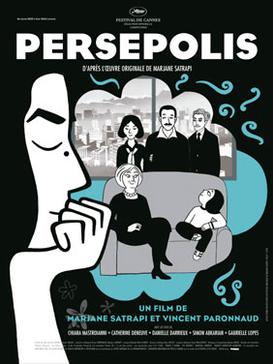
So i was going to show the great animated film 'Persepolis' as part of film club but it is up for free on you tube so I have embedded it below.
Its a fantastic story and insight into the situation in Iran all tose years ago and about how things like hijabs and veils can be used as political statements just like in my tutor time last week !!
Enjoy
Go to this playlist here and click 'Play all'











Subscribe to:
Posts (Atom)